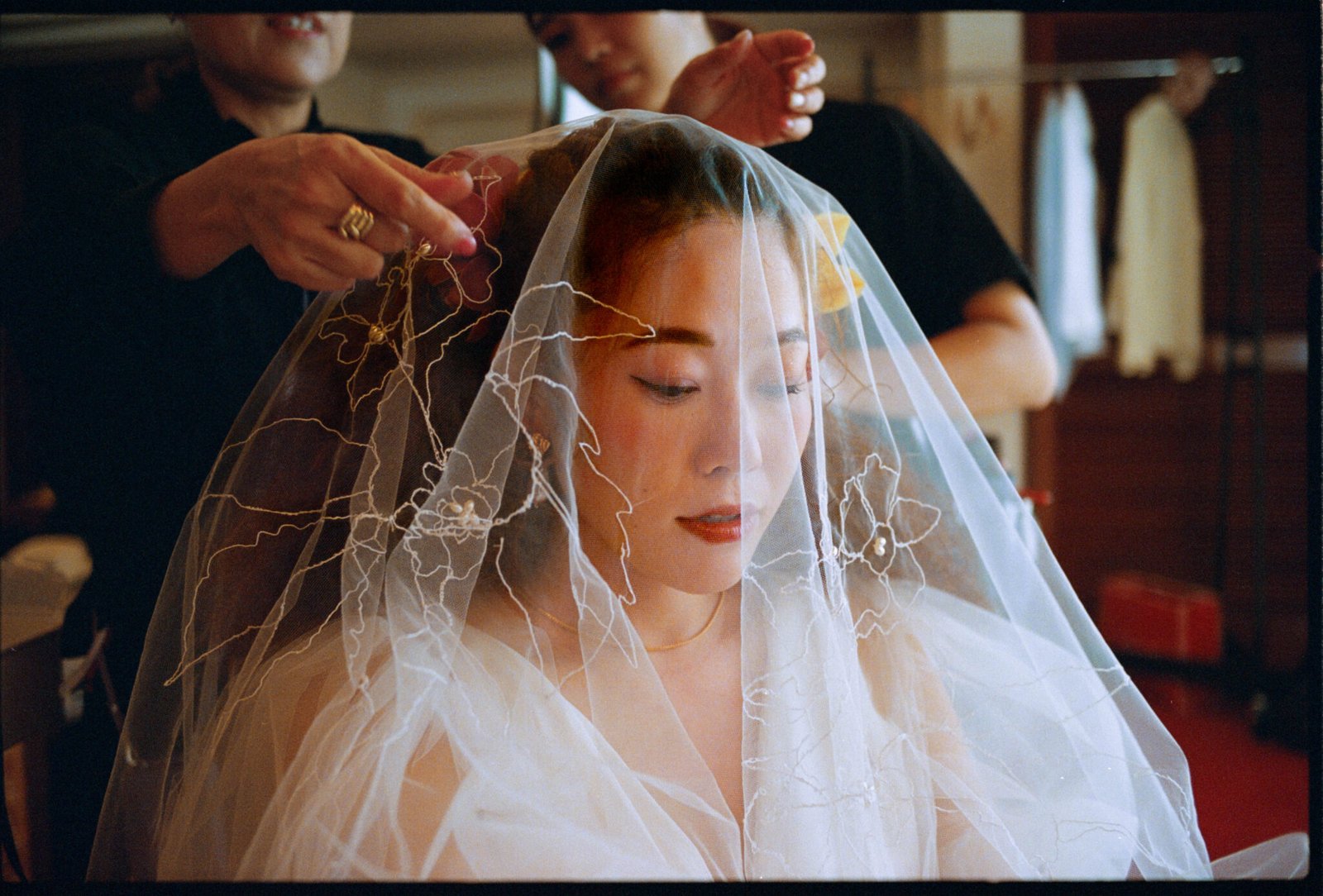
Why I photograph weddings on film
Couples come to film for the same reason I do: we find it more beautiful. Faces look gentler, colours are deep and unforced, and there's a texture to the picture that no amount of editing can add.
The other reasons arrive later. Film lasts. It doesn't date. I photograph the entire wedding on it, so the getting ready and the last dance look like the same day.
Where the look comes from
It isn't added afterwards. The film stock sets it in the camera: how colour falls, how much grain shows, the way light interacts with the skin. Developing, scanning and editing only carry it through. My cameras are mostly loaded with Kodak Portra, or Kodak Tri-X when a moment suits black and white.
Film also changes what it feels like to be photographed. No screen pulling attention away, no pressure to perform. I take fewer frames and mean every one, and the real moments arrive on their own.
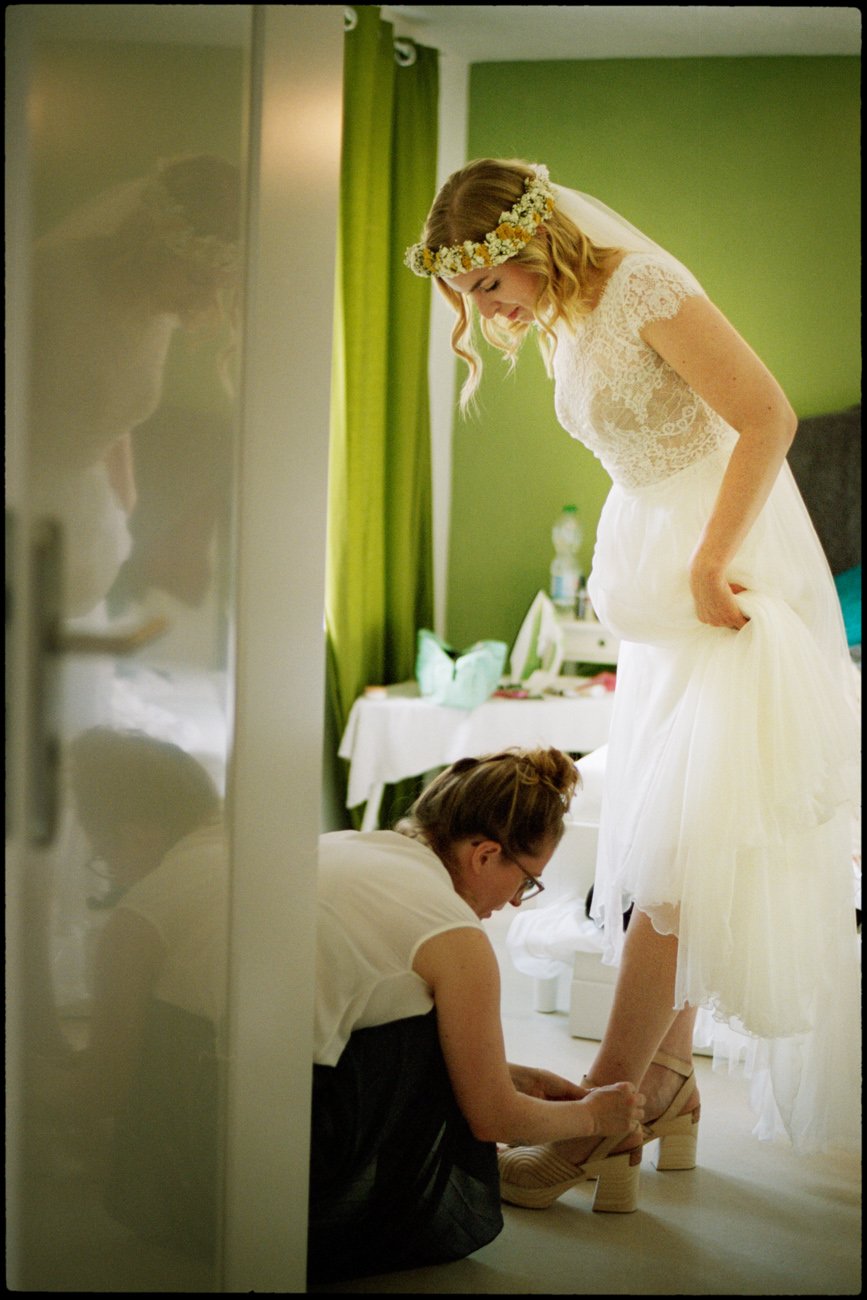
A photograph of something that happened
With film, every photograph begins as one physical object: a negative that sat in the camera while you were getting married, exposed by the light of that day and by nothing else. It cannot be rewritten afterwards. At the end I hand it to you: not a copy of your wedding, but a piece of it.
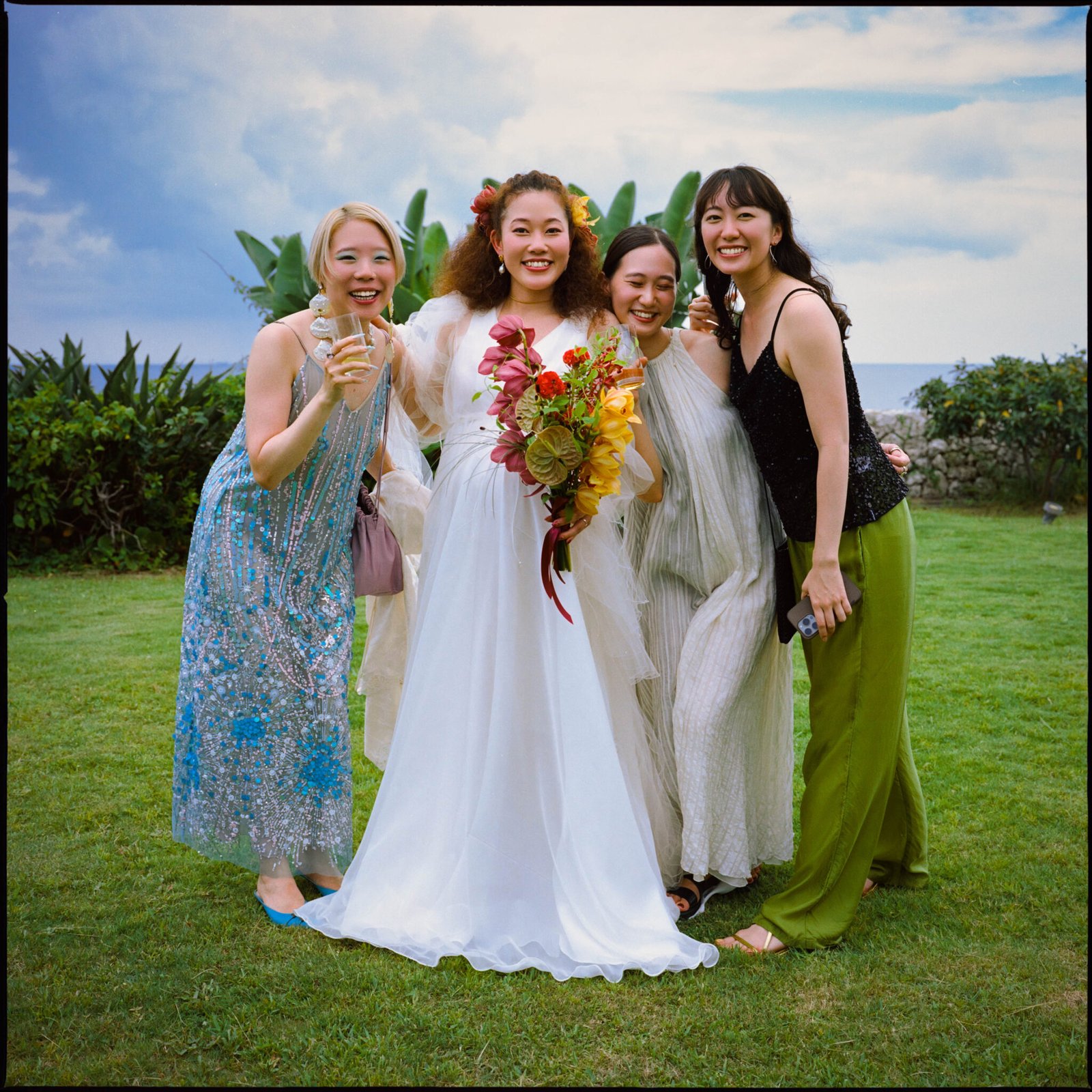
Medium format and 35mm
I work with two film formats and move between them as the day changes. Medium format is the slower of the two, and produces a larger negative. I shoot it on a Contax 645, the camera I trust most. I use it for portraits, tender moments, interiors, and scenes where the picture should feel calm.
35mm is quicker and easier to move with. I use it when people are moving, when the room is changing quickly, and when I need to stay very close to what is happening. Everything is photographed on film and scanned afterwards, so you get a set of digital files, alongside the originals.
When a second photographer joins
At some weddings a second photographer works alongside me. We have photographed together for years and see weddings much the same way, so very little needs to be said on the day itself.
It makes sense when your day begins in two places at once, or when there are enough guests that one person cannot be everywhere. Whether it suits your day is something we decide beforehand. He shoots film too, the same stocks in the same formats, so everything comes back as one consistent set of photographs.
Motion on analogue film
Alongside the photographs, an experienced cinematographer I work with films your day on Super 8: real motion picture stock, not a filter imitating it.
Each film runs three to five minutes. It's the kind of thing you watch again on an anniversary.
If you're considering analogue film for your wedding, tell me what you have in mind.